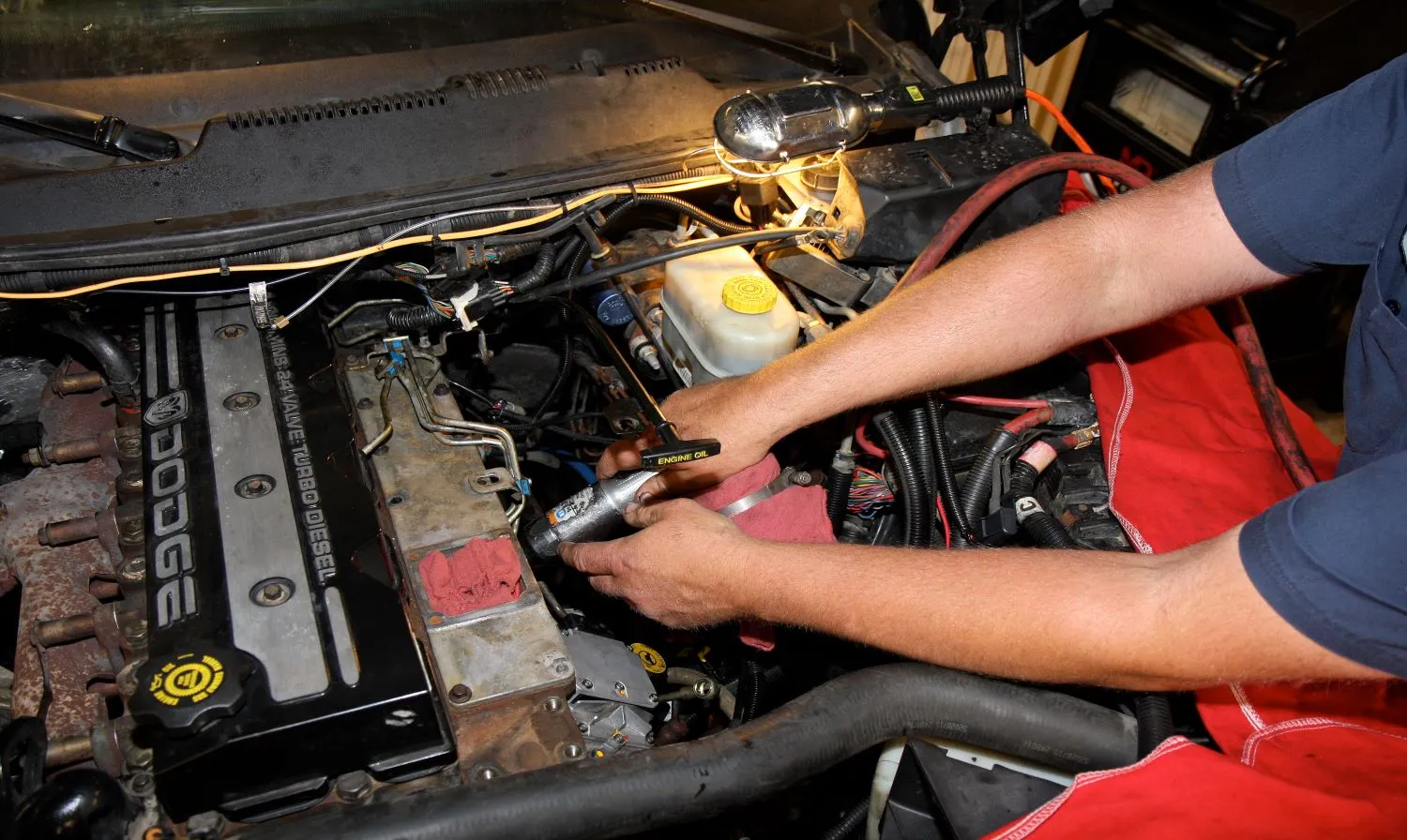
Understanding what a diesel engine is telling you through its symptoms is a genuinely useful skill — whether you are a vehicle owner trying to decide how urgently to seek help, or an operator managing a small fleet. This article covers the most commonly encountered diesel faults, explaining the typical symptom pattern, the likely underlying causes, and the general approach taken to diagnose and address each one.
It is important to note that many diesel symptoms overlap, and a single fault can sometimes produce several different signs simultaneously. Proper diagnosis requires testing rather than assumption — the guidance here is intended to inform, not to replace a professional assessment.
1. Rough Idle or Unstable Engine Speed at Rest
A diesel engine should idle smoothly and consistently once warm. If the engine shakes noticeably, hunts for a stable speed, or produces an irregular sound at idle, this is considered abnormal and warrants investigation.
Common Causes
The most frequent cause of rough idle in diesel engines is injector-related. Each injector in a common rail diesel system delivers a precisely calculated quantity of fuel at a specific point in the combustion cycle. If one or more injectors are delivering either too much or too little fuel — due to wear, deposit build-up, or internal seal failure — the engine will not fire evenly across all cylinders, producing the characteristic rough running.
Other causes include: EGR valve sticking in a partially open position, which dilutes the air-fuel mixture; air ingress in the low-pressure fuel circuit, which can cause erratic fuel delivery; and misfiring due to glow plug failure in cold conditions.
Diagnostic Approach
A contribution test — which measures each injector's fuel delivery relative to an expected target — is typically the starting point for rough idle diagnosis. Return rate measurement for common rail injectors can identify internal wear. Live data monitoring of EGR position, boost pressure, and fuel rail pressure helps narrow down the cause.
2. Excessive Exhaust Smoke
Diesel engines produce some visible exhaust on cold starts, particularly in cold weather, but persistent smoke in normal operating conditions is a sign that something is not working correctly. The colour of the smoke provides useful diagnostic information.
Black Smoke
Black smoke indicates that the engine is running with an excess of fuel relative to air — a rich mixture. This results in incomplete combustion and unburned fuel particles being expelled through the exhaust. Common causes include a blocked or restricted air filter, a failing turbocharger that is not providing adequate boost, worn or stuck-open injectors, or a malfunctioning EGR valve that is passing too much exhaust gas back into the intake charge.
Blue or Grey Smoke
Blue smoke typically indicates engine oil entering the combustion chamber and being burned. This can originate from worn piston rings and cylinder bores, damaged valve stem seals, or most commonly in modern turbocharged engines, a failing turbocharger seal. Oil-contaminated intake pipework — caused by turbo seal failure — is a specific pattern that should be investigated promptly, as the engine is effectively burning its own lubrication.
White Smoke
Persistent white smoke, distinct from the condensation vapour produced on cold starts, often indicates coolant entering the combustion chamber. This can be caused by head gasket failure or, less commonly, a cracked cylinder head or block. It is one of the more serious symptoms, as continued operation in this condition risks major engine damage.
The smoke colour diagnostic method is a useful starting point, but should not be used as the sole basis for parts replacement. Proper testing is required to confirm the source before carrying out repairs.
3. Loss of Power or Poor Performance
A diesel that struggles to accelerate, cannot maintain speed on an incline, or feels noticeably slower than usual is experiencing some form of restriction in its power output. This is one of the most commonly reported complaints from diesel vehicle owners.
Common Causes
Power loss in diesels has a long list of potential causes: insufficient boost pressure due to turbocharger wear or boost leaks; a blocked DPF causing exhaust back-pressure that effectively chokes the engine; restricted fuel supply due to a blocked filter or failing lift pump; injector wear causing inadequate fuel delivery; a sticking VGT actuator that prevents the turbocharger from responding correctly to demand; or EGR-related issues that compromise the intake charge.
In many cases, the engine management system will have stored fault codes that point directly to the relevant system — though not every power loss issue triggers an engine warning light.
Diagnostic Approach
Live data monitoring during a test drive is particularly valuable for power loss diagnosis. Observing boost pressure, fuel rail pressure, EGT readings, and throttle response in real time under load provides much more information than a static test. A boost leak test using a specialised tool can identify air charge losses that would not be apparent from fault codes alone.
4. DPF Warning Light and Limp Mode
A DPF warning light indicates that the Diesel Particulate Filter has accumulated soot beyond the normal regeneration threshold. Left unaddressed, continued operation will eventually cause the engine management system to enter limp mode — a self-protective strategy that restricts engine output to reduce exhaust temperatures and prevent further DPF damage.
Causes and Background
As discussed in our maintenance article, DPF blocking is strongly associated with frequent short-distance driving. However, it can also be accelerated by underlying faults: an EGT sensor that is giving incorrect temperature readings can prevent active regeneration from completing properly; injector wear that causes poor atomisation increases soot production; and oil entering the exhaust due to turbo seal failure produces ash that accumulates in the DPF permanently (as ash does not burn off during regeneration).
Repair Options
A forced active regeneration, carried out with the vehicle stationary using a diagnostic tool, is often effective for a DPF that has blocked due to operating conditions alone, provided the soot load is not excessively high. Where the DPF has a high ash load — which accumulates permanently over the vehicle's life — the filter may require specialist off-vehicle cleaning or replacement. It is important to address any underlying faults before clearing the DPF, as they will cause recurrence.
5. Difficult Starting — Especially When Cold
Diesel engines are more sensitive to cold starting than petrol equivalents, due to their reliance on compression heat to initiate combustion. Difficult starting — requiring extended cranking or multiple attempts — points to something reducing the available heat or the fuel delivered to the cylinder.
Glow Plugs and Compression
Failed or slow-heating glow plugs are the most common cause of cold start difficulty. A simple glow plug test with a multimeter can identify failed units. However, if all glow plugs appear healthy, attention should turn to compression. Low compression — caused by worn piston rings, a worn cylinder bore, or a damaged cylinder head — can prevent the air charge from reaching the temperature required for ignition regardless of glow plug function.
Fuel System Issues
Air ingress in the low-pressure fuel circuit is another common cause of difficult starting: if air enters the system when the engine is switched off, the fuel supply must re-prime before adequate pressure can be built for injection. A leaking fuel lift pump, cracked low-pressure fuel pipes, or a faulty shut-off solenoid can all allow air into the system.
6. Engine Knocking or Unusual Noise
Knock in a diesel engine is normal under certain conditions — diesel combustion inherently produces a characteristic clatter at low speeds — but an unusual or worsening knock, particularly under load or at higher speeds, is a sign that something is mechanically wrong.
Injector noise — a sharp, metallic knock — can indicate injector failure or, in older mechanical injection systems, incorrect injection timing. Big-end bearing wear produces a deep, rhythmic knock that worsens under acceleration. Piston slap — a softer, more diffuse knock — is associated with worn cylinder bores and is typically loudest when the engine is cold and first started.
An engine knock that changes in character with oil pressure is particularly concerning and should be investigated without delay. Continued operation of an engine with a bearing knock risks catastrophic failure.
Knowing When to Stop Driving
Some diesel faults can be driven on cautiously until a repair appointment can be arranged. Others warrant immediate action. The following symptoms should be treated as reasons to stop driving and seek assistance promptly:
- Low oil pressure warning light, particularly combined with any knock
- Engine overheating — temperature gauge approaching or in the red
- Persistent white smoke suggesting coolant loss
- Sudden total loss of power on the road
- Engine management light combined with very rough running or misfiring
- Smell of burning or visible fluid under the vehicle
Continuing to drive a vehicle displaying any of these symptoms risks escalating a potentially repairable fault into a much more serious and costly one. If in doubt, it is always better to err on the side of caution.